Loading...
Loading...
The life of the mind. Thinkers, schools, and systems, from the Stoics and Plato through Nietzsche and Schopenhauer to modern thought.
This territory has no lord — claim it →
Painting · Jacques-Louis David
David's The Death of Socrates (1787) is a manifesto of Neoclassicism: the philosopher reaches for the hemlock mid-argument, still teaching as he dies.Crosses Neoclassicism × Painting × Socrates, an ar
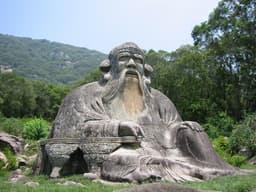
Painting (Chinese ink on silk, traditional iconography) · Anonymous (Chinese tradition, post-Song dynasty rendering)
This depiction of Laozi mounted on a water buffalo follows the canonical iconography of the founder of Daoism: the white-bearded sage at the moment of his legendary departure westward through the Hang
Portrait (oil on canvas) · Ludwig Sigismund Ruhl (German, 1815)
Painted by Ludwig Sigismund Ruhl in 1815, this portrait shows Arthur Schopenhauer at age twenty-seven, two years after the publication of his dissertation On the Fourfold Root of the Principle of Suff
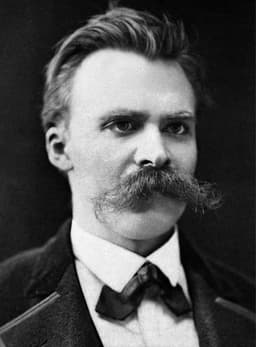
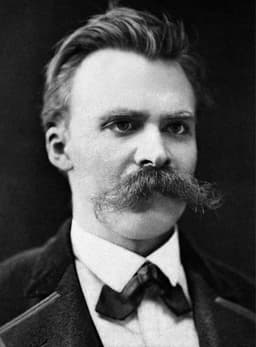
Portrait photograph · Gustav Adolf Schultze (German photographer, 1882)
This photographic portrait of Friedrich Nietzsche, taken by Gustav Schultze in his Naumburg studio in September 1882, is one of the most reproduced images of the philosopher. Nietzsche is shown at age
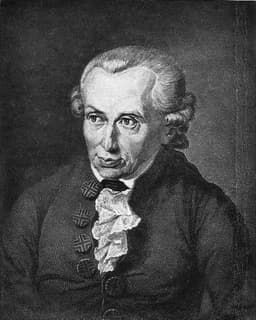
Portrait (oil on canvas) · Anonymous (German school, late 18th century)
This portrait of Immanuel Kant in his Königsberg years (1724 to 1804) shows the philosopher in academic costume at the writing desk where he composed the three Critiques: the Critique of Pure Reason (
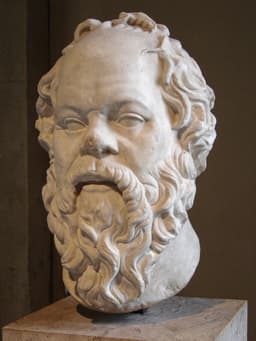
Sculpture (Roman marble copy after Greek original) · Anonymous (Roman copy, 1st century CE, after Greek 4th-century BCE original)
This Roman marble bust of Socrates held in the Louvre is one of the principal surviving portraits of the philosopher whose execution in 399 BCE has been treated as the founding martyrdom of Western ph
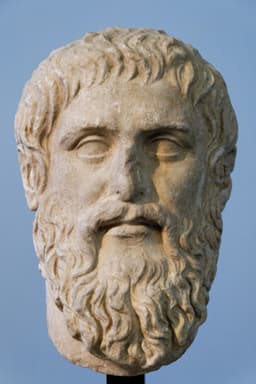
Sculpture (Roman marble copy after Greek bronze original) · After Silanion (Greek sculptor, c. 370 BCE original; Roman copy c. 1st century CE)
This marble bust of Plato held in the Capitoline Museums in Rome is the canonical portrait type of the founder of the Academy. The original was a bronze statue commissioned around 370 BCE by the Persi
Sacred Text (printed scroll, world's earliest dated printed book) · Anonymous (Tang-dynasty Chinese printer, 11 May 868 CE)
This is the frontispiece and opening text of the Diamond Sutra preserved as a complete printed scroll dated 11 May 868 CE, the world's earliest known dated printed book and one of the most important a
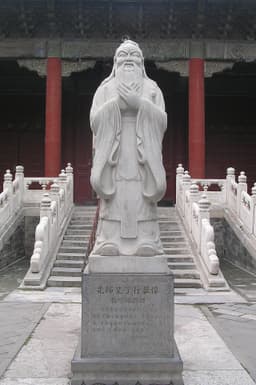
Sculpture (bronze statue) · Anonymous (modern; classical iconography)
This bronze statue of Confucius, standing at the Confucius Temple, depicts the philosopher in the canonical scholar's robes with hands folded in the traditional gesture of greeting and reverence. The
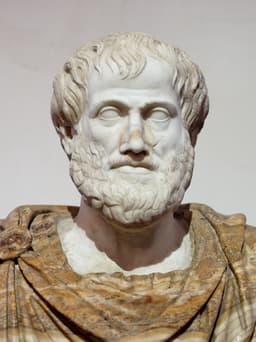
Sculpture (marble portrait bust) · Anonymous (Roman copy after Greek original)
This portrait bust of Aristotle, held in the Palazzo Altemps collection of the Museo Nazionale Romano, is one of the most authoritative ancient images of the philosopher. The bust is a Roman marble co
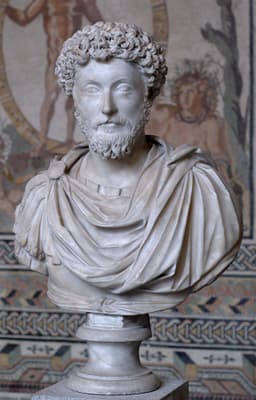
Sculpture (marble portrait bust) · Anonymous (Roman, 2nd century CE)
This portrait bust of Marcus Aurelius, sculpted in the second century CE during his reign, is one of the most recognized images of the philosopher-emperor. The bust shows him as a mature man with the
Philosophical aphorism · Friedrich Nietzsche
Section 146 of Jenseits von Gut und Böse is twenty-eight words in the German. Wer mit Ungeheuern kämpft, mag zusehn, dass er nicht dabei zum Ungeheuer wird. Und wenn du lange in einen Abgrund blickst,
Philosophical work (book) · Friedrich Nietzsche
Nietzsche wrote Zarathustra in four parts between 1883 and 1885, in compositional bursts of ten to fourteen days each. The speed is unusual for him; he was a slow writer who normally agonised over rev
The life of the mind. Thinkers, schools, and systems, from the Stoics and Plato through Nietzsche and Schopenhauer to modern thought.
This territory has no lord — claim it →Painting · Jacques-Louis David
David's The Death of Socrates (1787) is a manifesto of Neoclassicism: the philosopher reaches for the hemlock mid-argument, still teaching as he dies.Crosses Neoclassicism × Painting × Socrates, an ar
Painting (Chinese ink on silk, traditional iconography) · Anonymous (Chinese tradition, post-Song dynasty rendering)
This depiction of Laozi mounted on a water buffalo follows the canonical iconography of the founder of Daoism: the white-bearded sage at the moment of his legendary departure westward through the Hang
Portrait (oil on canvas) · Ludwig Sigismund Ruhl (German, 1815)
Painted by Ludwig Sigismund Ruhl in 1815, this portrait shows Arthur Schopenhauer at age twenty-seven, two years after the publication of his dissertation On the Fourfold Root of the Principle of Suff
Portrait photograph · Gustav Adolf Schultze (German photographer, 1882)
This photographic portrait of Friedrich Nietzsche, taken by Gustav Schultze in his Naumburg studio in September 1882, is one of the most reproduced images of the philosopher. Nietzsche is shown at age
Portrait (oil on canvas) · Anonymous (German school, late 18th century)
This portrait of Immanuel Kant in his Königsberg years (1724 to 1804) shows the philosopher in academic costume at the writing desk where he composed the three Critiques: the Critique of Pure Reason (
Sculpture (Roman marble copy after Greek original) · Anonymous (Roman copy, 1st century CE, after Greek 4th-century BCE original)
This Roman marble bust of Socrates held in the Louvre is one of the principal surviving portraits of the philosopher whose execution in 399 BCE has been treated as the founding martyrdom of Western ph
Sculpture (Roman marble copy after Greek bronze original) · After Silanion (Greek sculptor, c. 370 BCE original; Roman copy c. 1st century CE)
This marble bust of Plato held in the Capitoline Museums in Rome is the canonical portrait type of the founder of the Academy. The original was a bronze statue commissioned around 370 BCE by the Persi
Sacred Text (printed scroll, world's earliest dated printed book) · Anonymous (Tang-dynasty Chinese printer, 11 May 868 CE)
This is the frontispiece and opening text of the Diamond Sutra preserved as a complete printed scroll dated 11 May 868 CE, the world's earliest known dated printed book and one of the most important a
Sculpture (bronze statue) · Anonymous (modern; classical iconography)
This bronze statue of Confucius, standing at the Confucius Temple, depicts the philosopher in the canonical scholar's robes with hands folded in the traditional gesture of greeting and reverence. The
Sculpture (marble portrait bust) · Anonymous (Roman copy after Greek original)
This portrait bust of Aristotle, held in the Palazzo Altemps collection of the Museo Nazionale Romano, is one of the most authoritative ancient images of the philosopher. The bust is a Roman marble co
Sculpture (marble portrait bust) · Anonymous (Roman, 2nd century CE)
This portrait bust of Marcus Aurelius, sculpted in the second century CE during his reign, is one of the most recognized images of the philosopher-emperor. The bust shows him as a mature man with the
Philosophical aphorism · Friedrich Nietzsche
Section 146 of Jenseits von Gut und Böse is twenty-eight words in the German. Wer mit Ungeheuern kämpft, mag zusehn, dass er nicht dabei zum Ungeheuer wird. Und wenn du lange in einen Abgrund blickst,
Philosophical work (book) · Friedrich Nietzsche
Nietzsche wrote Zarathustra in four parts between 1883 and 1885, in compositional bursts of ten to fourteen days each. The speed is unusual for him; he was a slow writer who normally agonised over rev