Loading...
Loading...
The built world. Architecture, cathedrals, monuments, the applied arts, and the artisan trades, the things people make and inhabit. Most artistic media are filed here.
This territory has no lord — claim it →
Monologue · Trainspotting by Danny Boyle (1996)
"Choose Life. Choose a job. Choose a career. Choose a family. Choose a fucking big television, choose washing machines, cars, compact disc players and electrical tin openers. Choose good health, low c

Monologue · Trainspotting by Danny Boyle (1996)
"Choose Life. Choose a job. Choose a career. Choose a family. Choose a fucking big television, choose washing machines, cars, compact disc players and electrical tin openers. Choose good health, low c
Painting · Nicolas Poussin
Poussin's Et in Arcadia ego (c. 1638) is the great meditation of Baroque classicism: shepherds in an idyllic Arcadia reading a tomb's inscription, death present even in paradise.Crosses Baroque × Pain
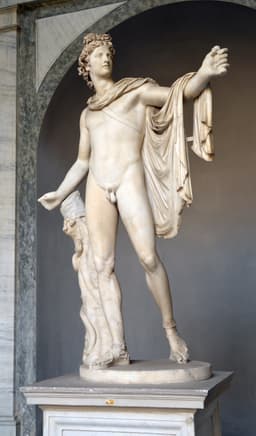
Sculpture · Roman copy after Leochares
The Apollo Belvedere (Roman copy of a Greek bronze, in the Vatican) was for centuries the ideal of classical male beauty, the touchstone Winckelmann built Neoclassical taste around.Crosses Sculpture ×
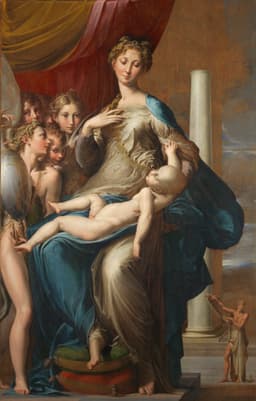
Painting · Parmigianino
Parmigianino's Madonna with the Long Neck (1535) is a defining work of Mannerism, its elongated proportions and cool elegance a deliberate departure from High Renaissance balance.Crosses Mannerism × P
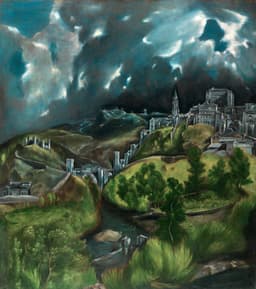
Painting · El Greco
El Greco's View of Toledo (c. 1600) is one of the only pure landscapes of the Spanish Renaissance and a peak of Mannerism, the city seen under a storm-charged, almost visionary sky.Crosses Mannerism ×
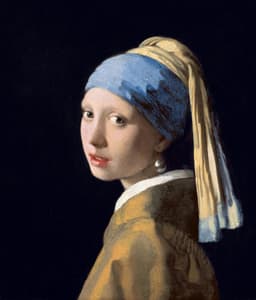
Painting · Johannes Vermeer
Vermeer's Girl with a Pearl Earring (c. 1665) is the most famous of the Dutch Golden Age tronies, a study in light, gaze, and the single luminous pearl.Crosses Baroque × Painting × 1600s. Reference.

Painting · Limbourg Brothers
The Tres Riches Heures du Duc de Berry (c. 1412-1416), the January calendar page shown here, is the supreme surviving Gothic illuminated manuscript.Crosses International Gothic × Painting × Christiani

Painting · John Duncan
John Duncan's The Riders of the Sidhe (1911) is a central work of the Celtic Revival, the fairy host of Irish and Scottish myth riding in procession.Crosses Symbolism × Painting × Celtic Mythology, a

Painting · Jean-Francois Millet
Millet's The Gleaners (1857) is a landmark of Realism, three peasant women stooping over a harvested field given the gravity of a history painting.Crosses Realism × Painting × 1850s, opening the Reali

Painting · Vincent van Gogh
Van Gogh's The Starry Night (1889) is the defining work of Post-Impressionism, the night sky over Saint-Rémy turned into turbulence and light.Crosses Post-Impressionism × Painting × 1880s, opening the

Painting · Jacques-Louis David
David's The Death of Socrates (1787) is a manifesto of Neoclassicism: the philosopher reaches for the hemlock mid-argument, still teaching as he dies.Crosses Neoclassicism × Painting × Socrates, an ar

Painting · Sandro Botticelli
Botticelli's Primavera (c. 1480) is one of the most studied paintings of the Italian Renaissance, an allegory of spring peopled by Venus, Mercury, the Three Graces, Flora and Zephyrus.Crosses Renaissa

Painting · Titian
Titian's Bacchus and Ariadne (1523) is a high point of the Venetian Renaissance, the god leaping from his chariot toward Ariadne in a blaze of ultramarine.Crosses Renaissance × Painting × Greek Mythol
Painting · Eugene Delacroix
Delacroix's Medea about to Kill her Children (1838) brings the Greek tragedy into full Romantic register, the sorceress half in shadow at the moment before the act.Crosses Romanticism × Painting × Gre
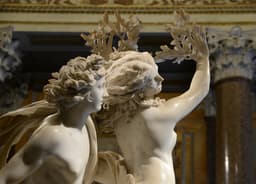
Sculpture · Gian Lorenzo Bernini
Bernini's Apollo and Daphne (1625) is the defining Baroque sculpture, marble caught at the instant Daphne turns to laurel to escape the god.Crosses Baroque × Sculpture × Greek Mythology. Reference.
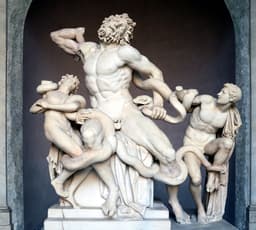
Sculpture · Hellenistic Greek (Vatican)
The Laocoon group (Hellenistic, in the Vatican since 1506) is one of the most influential sculptures in Western art, the Trojan priest and his sons crushed by sea serpents.Crosses Sculpture × Greek My

Painting · Peter Nicolai Arbo
Arbo's Asgardsreien (1872) is the great Romantic painting of the Norse Wild Hunt, Odin and the host of the dead riding across the night sky.Crosses Romanticism × Painting × Norse Mythology, and connec

Painting · Elihu Vedder
Vedder's The Questioner of the Sphinx (1863) is a key American Symbolist work, a lone figure pressing his ear to the lips of the half-buried Egyptian sphinx for an answer that will not come.Crosses Sy
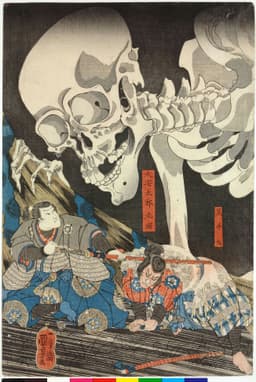
Woodblock print · Utagawa Kuniyoshi
Kuniyoshi's triptych (c. 1844) is one of the masterworks of ukiyo-e, the sorceress Takiyasha summoning a giant skeleton from a scroll of spells.Crosses Ukiyo-e × Japanese Mythology, bringing a non-Eur
The built world. Architecture, cathedrals, monuments, the applied arts, and the artisan trades, the things people make and inhabit. Most artistic media are filed here.
This territory has no lord — claim it →Monologue · Trainspotting by Danny Boyle (1996)
"Choose Life. Choose a job. Choose a career. Choose a family. Choose a fucking big television, choose washing machines, cars, compact disc players and electrical tin openers. Choose good health, low c
Monologue · Trainspotting by Danny Boyle (1996)
"Choose Life. Choose a job. Choose a career. Choose a family. Choose a fucking big television, choose washing machines, cars, compact disc players and electrical tin openers. Choose good health, low c
Painting · Nicolas Poussin
Poussin's Et in Arcadia ego (c. 1638) is the great meditation of Baroque classicism: shepherds in an idyllic Arcadia reading a tomb's inscription, death present even in paradise.Crosses Baroque × Pain
Sculpture · Roman copy after Leochares
The Apollo Belvedere (Roman copy of a Greek bronze, in the Vatican) was for centuries the ideal of classical male beauty, the touchstone Winckelmann built Neoclassical taste around.Crosses Sculpture ×
Painting · Parmigianino
Parmigianino's Madonna with the Long Neck (1535) is a defining work of Mannerism, its elongated proportions and cool elegance a deliberate departure from High Renaissance balance.Crosses Mannerism × P
Painting · El Greco
El Greco's View of Toledo (c. 1600) is one of the only pure landscapes of the Spanish Renaissance and a peak of Mannerism, the city seen under a storm-charged, almost visionary sky.Crosses Mannerism ×
Painting · Johannes Vermeer
Vermeer's Girl with a Pearl Earring (c. 1665) is the most famous of the Dutch Golden Age tronies, a study in light, gaze, and the single luminous pearl.Crosses Baroque × Painting × 1600s. Reference.
Painting · Limbourg Brothers
The Tres Riches Heures du Duc de Berry (c. 1412-1416), the January calendar page shown here, is the supreme surviving Gothic illuminated manuscript.Crosses International Gothic × Painting × Christiani
Painting · John Duncan
John Duncan's The Riders of the Sidhe (1911) is a central work of the Celtic Revival, the fairy host of Irish and Scottish myth riding in procession.Crosses Symbolism × Painting × Celtic Mythology, a
Painting · Jean-Francois Millet
Millet's The Gleaners (1857) is a landmark of Realism, three peasant women stooping over a harvested field given the gravity of a history painting.Crosses Realism × Painting × 1850s, opening the Reali
Painting · Vincent van Gogh
Van Gogh's The Starry Night (1889) is the defining work of Post-Impressionism, the night sky over Saint-Rémy turned into turbulence and light.Crosses Post-Impressionism × Painting × 1880s, opening the
Painting · Jacques-Louis David
David's The Death of Socrates (1787) is a manifesto of Neoclassicism: the philosopher reaches for the hemlock mid-argument, still teaching as he dies.Crosses Neoclassicism × Painting × Socrates, an ar
Painting · Sandro Botticelli
Botticelli's Primavera (c. 1480) is one of the most studied paintings of the Italian Renaissance, an allegory of spring peopled by Venus, Mercury, the Three Graces, Flora and Zephyrus.Crosses Renaissa
Painting · Titian
Titian's Bacchus and Ariadne (1523) is a high point of the Venetian Renaissance, the god leaping from his chariot toward Ariadne in a blaze of ultramarine.Crosses Renaissance × Painting × Greek Mythol
Painting · Eugene Delacroix
Delacroix's Medea about to Kill her Children (1838) brings the Greek tragedy into full Romantic register, the sorceress half in shadow at the moment before the act.Crosses Romanticism × Painting × Gre
Sculpture · Gian Lorenzo Bernini
Bernini's Apollo and Daphne (1625) is the defining Baroque sculpture, marble caught at the instant Daphne turns to laurel to escape the god.Crosses Baroque × Sculpture × Greek Mythology. Reference.
Sculpture · Hellenistic Greek (Vatican)
The Laocoon group (Hellenistic, in the Vatican since 1506) is one of the most influential sculptures in Western art, the Trojan priest and his sons crushed by sea serpents.Crosses Sculpture × Greek My
Painting · Peter Nicolai Arbo
Arbo's Asgardsreien (1872) is the great Romantic painting of the Norse Wild Hunt, Odin and the host of the dead riding across the night sky.Crosses Romanticism × Painting × Norse Mythology, and connec
Painting · Elihu Vedder
Vedder's The Questioner of the Sphinx (1863) is a key American Symbolist work, a lone figure pressing his ear to the lips of the half-buried Egyptian sphinx for an answer that will not come.Crosses Sy
Woodblock print · Utagawa Kuniyoshi
Kuniyoshi's triptych (c. 1844) is one of the masterworks of ukiyo-e, the sorceress Takiyasha summoning a giant skeleton from a scroll of spells.Crosses Ukiyo-e × Japanese Mythology, bringing a non-Eur