Loading...
Loading...
Gods, heroes, and sacred stories across cultures, Greek, Norse, Egyptian, Hindu, Slavic, Celtic, and beyond.
This territory has no lord — claim it →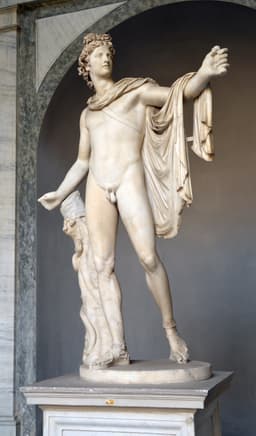
Sculpture · Roman copy after Leochares
The Apollo Belvedere (Roman copy of a Greek bronze, in the Vatican) was for centuries the ideal of classical male beauty, the touchstone Winckelmann built Neoclassical taste around.Crosses Sculpture ×

Painting · John Duncan
John Duncan's The Riders of the Sidhe (1911) is a central work of the Celtic Revival, the fairy host of Irish and Scottish myth riding in procession.Crosses Symbolism × Painting × Celtic Mythology, a

Painting · Sandro Botticelli
Botticelli's Primavera (c. 1480) is one of the most studied paintings of the Italian Renaissance, an allegory of spring peopled by Venus, Mercury, the Three Graces, Flora and Zephyrus.Crosses Renaissa

Painting · Titian
Titian's Bacchus and Ariadne (1523) is a high point of the Venetian Renaissance, the god leaping from his chariot toward Ariadne in a blaze of ultramarine.Crosses Renaissance × Painting × Greek Mythol
Painting · Eugene Delacroix
Delacroix's Medea about to Kill her Children (1838) brings the Greek tragedy into full Romantic register, the sorceress half in shadow at the moment before the act.Crosses Romanticism × Painting × Gre
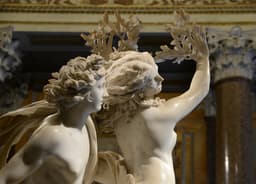
Sculpture · Gian Lorenzo Bernini
Bernini's Apollo and Daphne (1625) is the defining Baroque sculpture, marble caught at the instant Daphne turns to laurel to escape the god.Crosses Baroque × Sculpture × Greek Mythology. Reference.
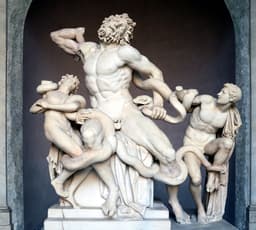
Sculpture · Hellenistic Greek (Vatican)
The Laocoon group (Hellenistic, in the Vatican since 1506) is one of the most influential sculptures in Western art, the Trojan priest and his sons crushed by sea serpents.Crosses Sculpture × Greek My

Painting · Peter Nicolai Arbo
Arbo's Asgardsreien (1872) is the great Romantic painting of the Norse Wild Hunt, Odin and the host of the dead riding across the night sky.Crosses Romanticism × Painting × Norse Mythology, and connec

Painting · Elihu Vedder
Vedder's The Questioner of the Sphinx (1863) is a key American Symbolist work, a lone figure pressing his ear to the lips of the half-buried Egyptian sphinx for an answer that will not come.Crosses Sy
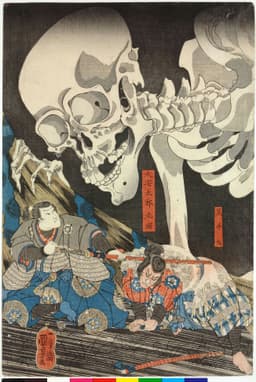
Woodblock print · Utagawa Kuniyoshi
Kuniyoshi's triptych (c. 1844) is one of the masterworks of ukiyo-e, the sorceress Takiyasha summoning a giant skeleton from a scroll of spells.Crosses Ukiyo-e × Japanese Mythology, bringing a non-Eur

Painting · Raja Ravi Varma
Raja Ravi Varma's Goddess Saraswati (1896) is a cornerstone of modern Indian painting, fusing European academic technique with Hindu sacred iconography and putting the gods into mass-reproducible imag

Painting · Viktor Vasnetsov
Vasnetsov's Bogatyrs (1898) is the defining image of Russian and Slavic folk-epic, the three heroes of the byliny rendered at monumental scale.Crosses Romanticism × Painting × Slavic Mythology, a cros
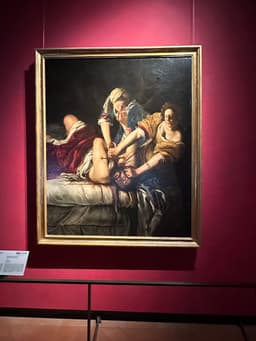
Painting · Artemisia Gentileschi
Gentileschi's Judith Slaying Holofernes (c. 1620) is the most unflinching Baroque treatment of the biblical scene, and a landmark work by one of the era's few professional women painters.Crosses Baroq
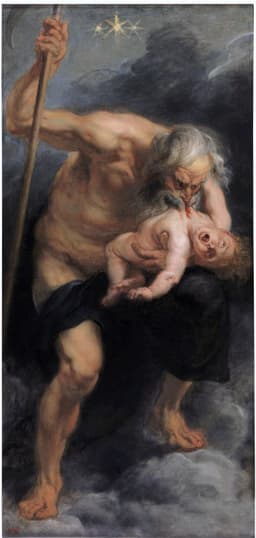
Painting · Peter Paul Rubens
Rubens' Saturn Devouring His Son (1636) gives the Roman myth its Baroque treatment: muscular, lit, and immediate. It sits in direct lineage with Goya's later, darker version already catalogued here.Cr
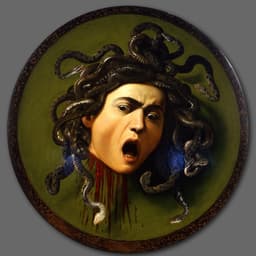
Painting · Caravaggio
Caravaggio's Medusa (c. 1597), painted on a ceremonial parade shield, fixes the Gorgon at the instant of decapitation, the scream and serpents rendered with the violent realism that drove the whole Ba
Black Metal · Kristoffer Rygg (Oslo, 1993)
Ulver began in Oslo in 1993 as a folkloric black metal project (the Bergtatt trilogy, drawn from Norwegian fairy tale and the motif of being taken into the mountain) before moving on into wholly other
Black Metal · Grutle Kjellson & Ivar Bjornson (Norway, 1991)
Enslaved, formed in Norway in 1991, built the bridge from second-wave black metal to a wider Norse and progressive register. Their catalogue is explicitly rooted in Old Norse mythology and the Viking
Black Metal · Quorthon (Stockholm, 1983)
Bathory, formed in Stockholm in 1983 around Quorthon, is one of the founding works of black metal and the origin point of Viking metal. The early records set the genre's raw template; the later ones (
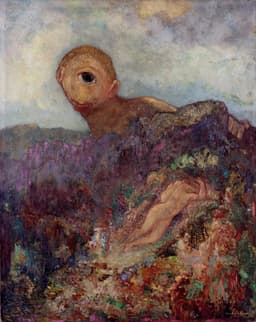
Oil on panel · Odilon Redon
Odilon Redon painted The Cyclops around 1914. The one-eyed giant Polyphemus rises from behind a hill of flowers, his single eye fixed on the small sleeping figure of the nymph Galatea below him. In Re
Oil on canvas · John William Waterhouse
John William Waterhouse painted Hylas and the Nymphs in 1896. The subject is Greek: Hylas, the young companion of Heracles on the voyage of the Argonauts, goes to fill a pitcher at a forest pool and i
Gods, heroes, and sacred stories across cultures, Greek, Norse, Egyptian, Hindu, Slavic, Celtic, and beyond.
This territory has no lord — claim it →Sculpture · Roman copy after Leochares
The Apollo Belvedere (Roman copy of a Greek bronze, in the Vatican) was for centuries the ideal of classical male beauty, the touchstone Winckelmann built Neoclassical taste around.Crosses Sculpture ×
Painting · John Duncan
John Duncan's The Riders of the Sidhe (1911) is a central work of the Celtic Revival, the fairy host of Irish and Scottish myth riding in procession.Crosses Symbolism × Painting × Celtic Mythology, a
Painting · Sandro Botticelli
Botticelli's Primavera (c. 1480) is one of the most studied paintings of the Italian Renaissance, an allegory of spring peopled by Venus, Mercury, the Three Graces, Flora and Zephyrus.Crosses Renaissa
Painting · Titian
Titian's Bacchus and Ariadne (1523) is a high point of the Venetian Renaissance, the god leaping from his chariot toward Ariadne in a blaze of ultramarine.Crosses Renaissance × Painting × Greek Mythol
Painting · Eugene Delacroix
Delacroix's Medea about to Kill her Children (1838) brings the Greek tragedy into full Romantic register, the sorceress half in shadow at the moment before the act.Crosses Romanticism × Painting × Gre
Sculpture · Gian Lorenzo Bernini
Bernini's Apollo and Daphne (1625) is the defining Baroque sculpture, marble caught at the instant Daphne turns to laurel to escape the god.Crosses Baroque × Sculpture × Greek Mythology. Reference.
Sculpture · Hellenistic Greek (Vatican)
The Laocoon group (Hellenistic, in the Vatican since 1506) is one of the most influential sculptures in Western art, the Trojan priest and his sons crushed by sea serpents.Crosses Sculpture × Greek My
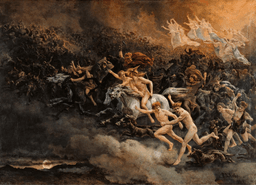
Painting · Peter Nicolai Arbo
Arbo's Asgardsreien (1872) is the great Romantic painting of the Norse Wild Hunt, Odin and the host of the dead riding across the night sky.Crosses Romanticism × Painting × Norse Mythology, and connec
Painting · Elihu Vedder
Vedder's The Questioner of the Sphinx (1863) is a key American Symbolist work, a lone figure pressing his ear to the lips of the half-buried Egyptian sphinx for an answer that will not come.Crosses Sy
Woodblock print · Utagawa Kuniyoshi
Kuniyoshi's triptych (c. 1844) is one of the masterworks of ukiyo-e, the sorceress Takiyasha summoning a giant skeleton from a scroll of spells.Crosses Ukiyo-e × Japanese Mythology, bringing a non-Eur
Painting · Raja Ravi Varma
Raja Ravi Varma's Goddess Saraswati (1896) is a cornerstone of modern Indian painting, fusing European academic technique with Hindu sacred iconography and putting the gods into mass-reproducible imag
Painting · Viktor Vasnetsov
Vasnetsov's Bogatyrs (1898) is the defining image of Russian and Slavic folk-epic, the three heroes of the byliny rendered at monumental scale.Crosses Romanticism × Painting × Slavic Mythology, a cros
Painting · Artemisia Gentileschi
Gentileschi's Judith Slaying Holofernes (c. 1620) is the most unflinching Baroque treatment of the biblical scene, and a landmark work by one of the era's few professional women painters.Crosses Baroq
Painting · Peter Paul Rubens
Rubens' Saturn Devouring His Son (1636) gives the Roman myth its Baroque treatment: muscular, lit, and immediate. It sits in direct lineage with Goya's later, darker version already catalogued here.Cr
Painting · Caravaggio
Caravaggio's Medusa (c. 1597), painted on a ceremonial parade shield, fixes the Gorgon at the instant of decapitation, the scream and serpents rendered with the violent realism that drove the whole Ba
Black Metal · Kristoffer Rygg (Oslo, 1993)
Ulver began in Oslo in 1993 as a folkloric black metal project (the Bergtatt trilogy, drawn from Norwegian fairy tale and the motif of being taken into the mountain) before moving on into wholly other
Black Metal · Grutle Kjellson & Ivar Bjornson (Norway, 1991)
Enslaved, formed in Norway in 1991, built the bridge from second-wave black metal to a wider Norse and progressive register. Their catalogue is explicitly rooted in Old Norse mythology and the Viking
Black Metal · Quorthon (Stockholm, 1983)
Bathory, formed in Stockholm in 1983 around Quorthon, is one of the founding works of black metal and the origin point of Viking metal. The early records set the genre's raw template; the later ones (
Oil on panel · Odilon Redon
Odilon Redon painted The Cyclops around 1914. The one-eyed giant Polyphemus rises from behind a hill of flowers, his single eye fixed on the small sleeping figure of the nymph Galatea below him. In Re
Oil on canvas · John William Waterhouse
John William Waterhouse painted Hylas and the Nymphs in 1896. The subject is Greek: Hylas, the young companion of Heracles on the voyage of the Argonauts, goes to fill a pitcher at a forest pool and i