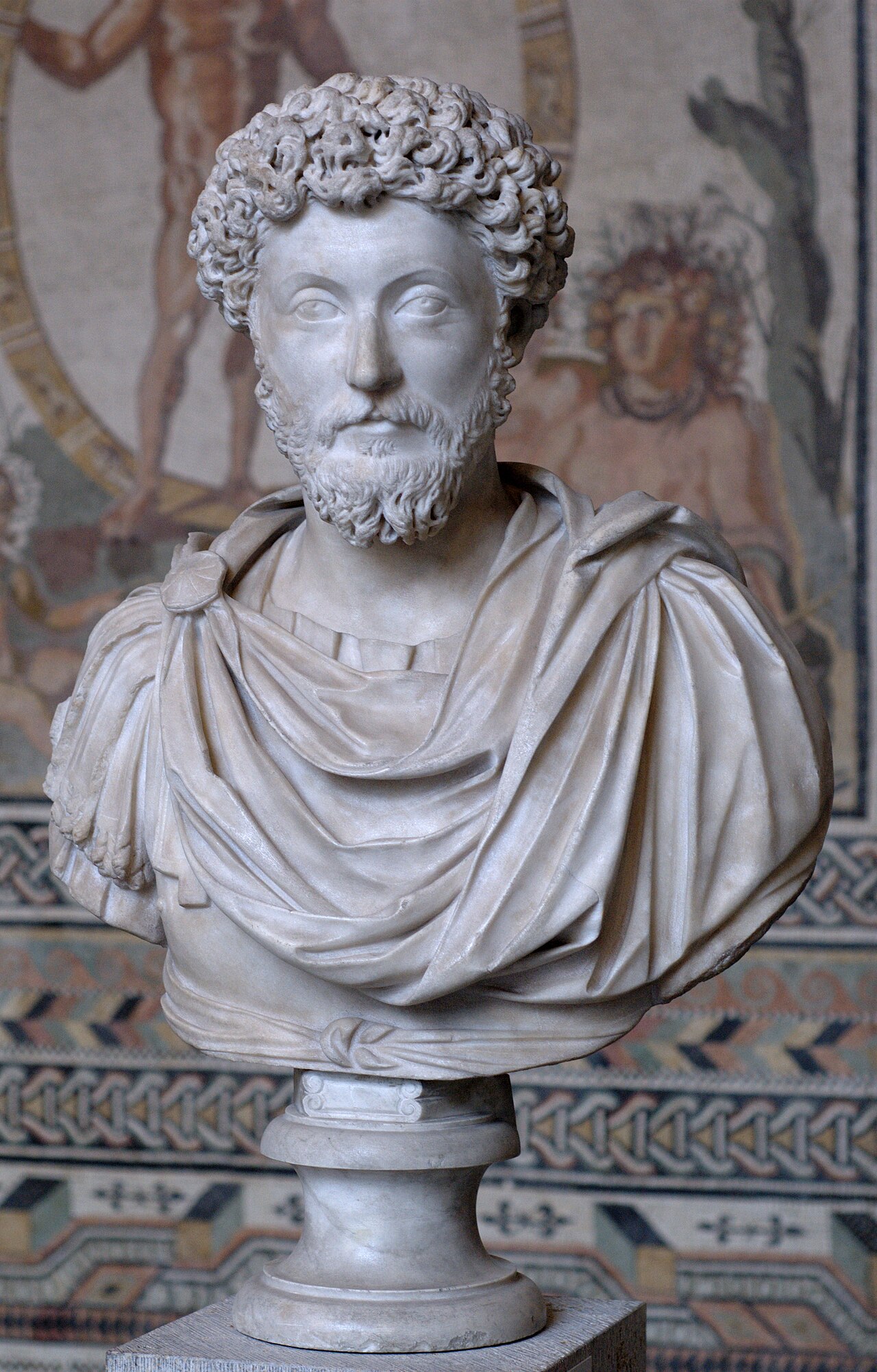


This portrait bust of Marcus Aurelius, sculpted in the second century CE during his reign, is one of the most recognized images of the philosopher-emperor. The bust shows him as a mature man with the curled beard and Hadrianic-style hair characteristic of the late Antonine portrait tradition. The work is in the Glyptothek collection in Munich, acquired during the nineteenth century from Italian sources.
Marcus Aurelius ruled the Roman Empire from 161 to 180 CE. He is now remembered less for his political reign than for the personal philosophical notebook he kept in Greek during his northern military campaigns, published posthumously as Ta eis heauton, conventionally translated as Meditations. The notebook is the single most influential work of late Stoic philosophy and one of the most-read works of the entire Stoic tradition.
The Stoic curriculum Marcus inherited from Epictetus and Musonius Rufus runs through every entry of the Meditations: distinguish what is within your control from what is not, accept the providence of nature, prepare yourself to die well. The Glyptothek bust is among the iconographic anchors of the Stoic tradition. It sits in conversation with the equestrian Marcus Aurelius on the Capitoline Hill in Rome and the philosophical portraits of his teachers preserved across the Mediterranean.