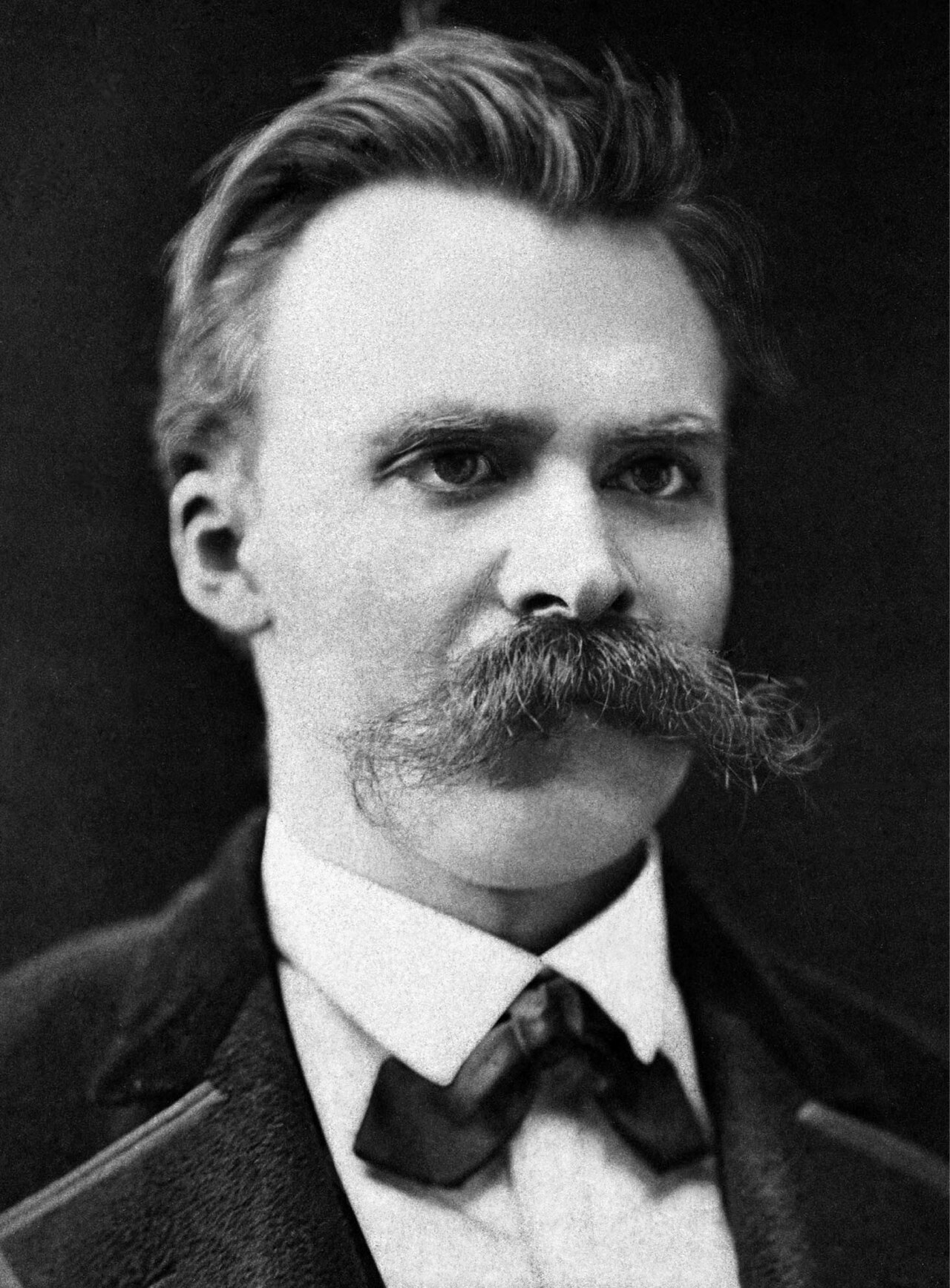


Nietzsche wrote Zarathustra in four parts between 1883 and 1885, in compositional bursts of ten to fourteen days each. The speed is unusual for him; he was a slow writer who normally agonised over revisions. The book came in waves because Nietzsche believed, accurately or not, that he was channelling something rather than constructing it. He chose the figure of Zarathustra (the Persian prophet of Zoroastrianism, founder of one of the world's oldest organised religions of moral dualism) precisely so he could overturn what the historical Zarathustra had taught. The prophet who first announced the cosmic battle between good and evil is enlisted to announce that the battle was an error.
The prologue establishes both the figure and the method. Zarathustra has spent ten years alone on a mountain. He descends to a marketplace and addresses a crowd: "Ich lehre euch den Übermenschen." I teach you the Overhuman. Humanity is something that shall be overcome. The crowd laughs at him. They have come to see a tightrope walker. By the end of the prologue Zarathustra has accepted that his teaching cannot be poured into the ears of any general audience. He must find companions, fellow creators, and speak only to them. The rest of the book is a sequence of speeches addressed to those companions.
The line between liberation and danger that the book draws (between the death of God and the freedom that follows or fails to follow) has shaped twentieth-century philosophy, art, and political thought, often in directions Nietzsche himself would have rejected. His sister Elisabeth Förster-Nietzsche edited and republished his late notebooks after his collapse in 1889 to align them with her Nazi politics, an act of forgery that took decades to be fully reversed. The book that Nietzsche called "for everyone and no one" was, for several generations, weaponised by people for whom it was certainly not meant. Reading the prologue today requires holding both the book Nietzsche wrote and the book his sister wanted it to be, and refusing to confuse them.