SACRED TEXT
7 posts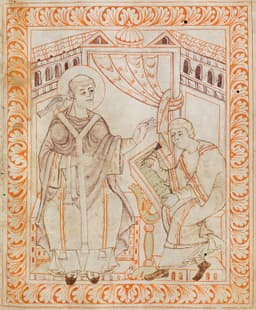
Antiphonary of Hartker (Gregory I)
Illuminated manuscript page (Gregorian chant notation) · Hartker of Sankt Gallen (Benedictine monk, c. 1000 CE)
This opening folio of the Antiphonary of Hartker depicts Pope Gregory I (the Great) seated at his writing desk with the dove of the Holy Spirit at his ear dictating the chants that, according to Carol
Hildegard of Bingen, Liber Divinorum Operum
Illuminated manuscript page (visionary illustration) · Anonymous (12th-century illuminator working under Hildegard's direction)
This illumination from Hildegard von Bingen's Liber Divinorum Operum (Book of Divine Works), composed between 1163 and 1173, is among the most reproduced of the visionary illustrations the abbess prod
Diamond Sutra
Sacred Text (printed scroll, world's earliest dated printed book) · Anonymous (Tang-dynasty Chinese printer, 11 May 868 CE)
This is the frontispiece and opening text of the Diamond Sutra preserved as a complete printed scroll dated 11 May 868 CE, the world's earliest known dated printed book and one of the most important a
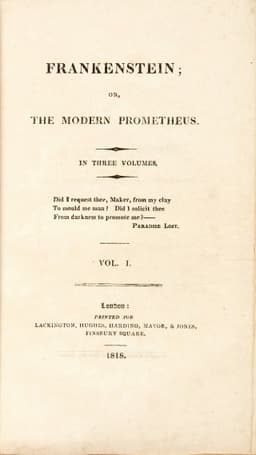
Frankenstein: 1818 First Edition Title Page
Sacred Text (first edition title page) · Mary Wollstonecraft Shelley
The title page of the 1818 first edition of Frankenstein; or, The Modern Prometheus, published anonymously in three volumes by Lackington, Hughes, Harding, Mavor, and Jones. The novel was Mary Shelley
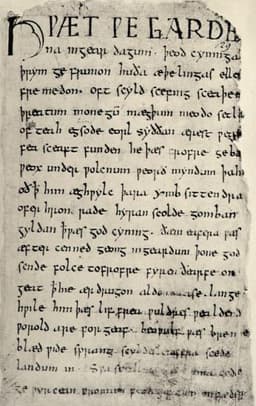
Beowulf: The First Folio
Sacred Text (manuscript) · Anonymous (Anglo-Saxon scribe, c. 10th-11th century)
The opening folio of the only surviving manuscript of Beowulf, Cotton Vitellius A.xv at the British Library. The poem was composed at some point between the 8th and 11th centuries; the manuscript copy
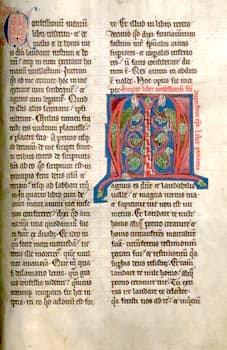
Confessions
Autobiographical / theological prose · Augustine of Hippo
Augustine wrote the Confessions in Latin between 397 and 400 CE, in his early forties, while he was Bishop of Hippo Regius in Roman North Africa. The work is thirteen books long, structured as a susta
Inferno, Canto III: The Gate of Hell
Sacred text (Italian narrative poem) · Dante Alighieri
The inscription above the gate of Hell is the most quoted passage in the Inferno, and the third line in particular has had a longer afterlife than the rest of the poem. Lasciate ogne speranza, voi ch'