Classical Literature
8 posts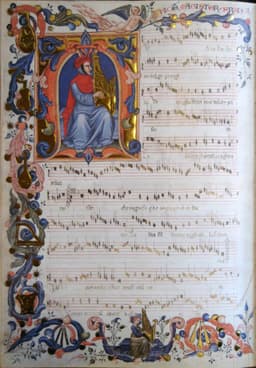
Squarcialupi Codex (Francesco Landini page)
Illuminated manuscript page (trecento Italian songbook) · Anonymous (Florentine workshop, c. 1410 to 1415)
This page from the Squarcialupi Codex (Florence, Biblioteca Medicea Laurenziana, Med. Pal. 87) is the opening folio of the section devoted to Francesco Landini, the blind Florentine organist who is th

Codex Manesse (Walther von der Vogelweide)
Illuminated manuscript page (Minnesinger songbook) · Anonymous (Zürich workshop, c. 1304 to c. 1340)
This page from the Codex Manesse (Heidelberg University Library, Cod. Pal. germ. 848) depicts the Middle High German poet Walther von der Vogelweide in the conventional posture of contemplative compos
Hildegard of Bingen, Liber Divinorum Operum
Illuminated manuscript page (visionary illustration) · Anonymous (12th-century illuminator working under Hildegard's direction)
This illumination from Hildegard von Bingen's Liber Divinorum Operum (Book of Divine Works), composed between 1163 and 1173, is among the most reproduced of the visionary illustrations the abbess prod
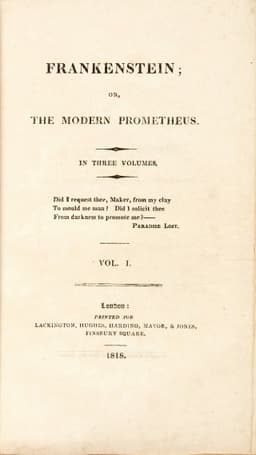
Frankenstein: 1818 First Edition Title Page
Sacred Text (first edition title page) · Mary Wollstonecraft Shelley
The title page of the 1818 first edition of Frankenstein; or, The Modern Prometheus, published anonymously in three volumes by Lackington, Hughes, Harding, Mavor, and Jones. The novel was Mary Shelley
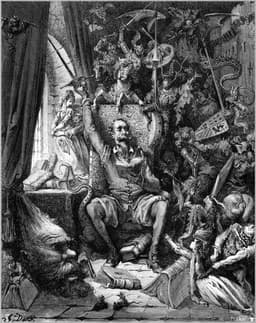
Don Quixote (Doré illustration)
Engraving · Gustave Doré
From the 1863 illustrated edition of Cervantes's Don Quixote, this Doré engraving shows Don Quixote in his library surrounded by chivalric romances, the books that have driven his imagination into the
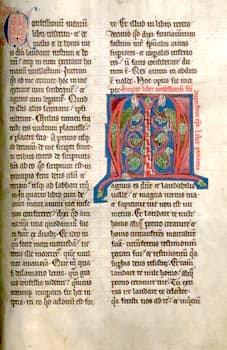
Confessions
Autobiographical / theological prose · Augustine of Hippo
Augustine wrote the Confessions in Latin between 397 and 400 CE, in his early forties, while he was Bishop of Hippo Regius in Roman North Africa. The work is thirteen books long, structured as a susta
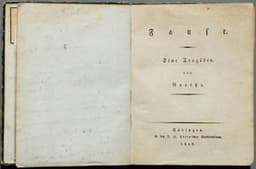
Faust I: Opening Monologue
Drama (Stück) · Johann Wolfgang von Goethe
The monologue that opens Faust is one of the rare moments in Western drama where a play stakes its entire premise on a single character's exhaustion. Heinrich Faust has mastered philosophy, jurisprude
Inferno, Canto III: The Gate of Hell
Sacred text (Italian narrative poem) · Dante Alighieri
The inscription above the gate of Hell is the most quoted passage in the Inferno, and the third line in particular has had a longer afterlife than the rest of the poem. Lasciate ogne speranza, voi ch'