

The monologue that opens Faust is one of the rare moments in Western drama where a play stakes its entire premise on a single character's exhaustion. Heinrich Faust has mastered philosophy, jurisprudence, medicine, and theology. He has read everything. He says so directly. Habe nun, ach! Philosophie, Juristerei und Medizin, und leider auch Theologie durchaus studiert, mit heißem Bemühn. The und leider, the "and unhappily," carries the weight of the whole speech. Theology is the discipline Faust mastered with the most reluctance. By the end of the monologue we will understand why.
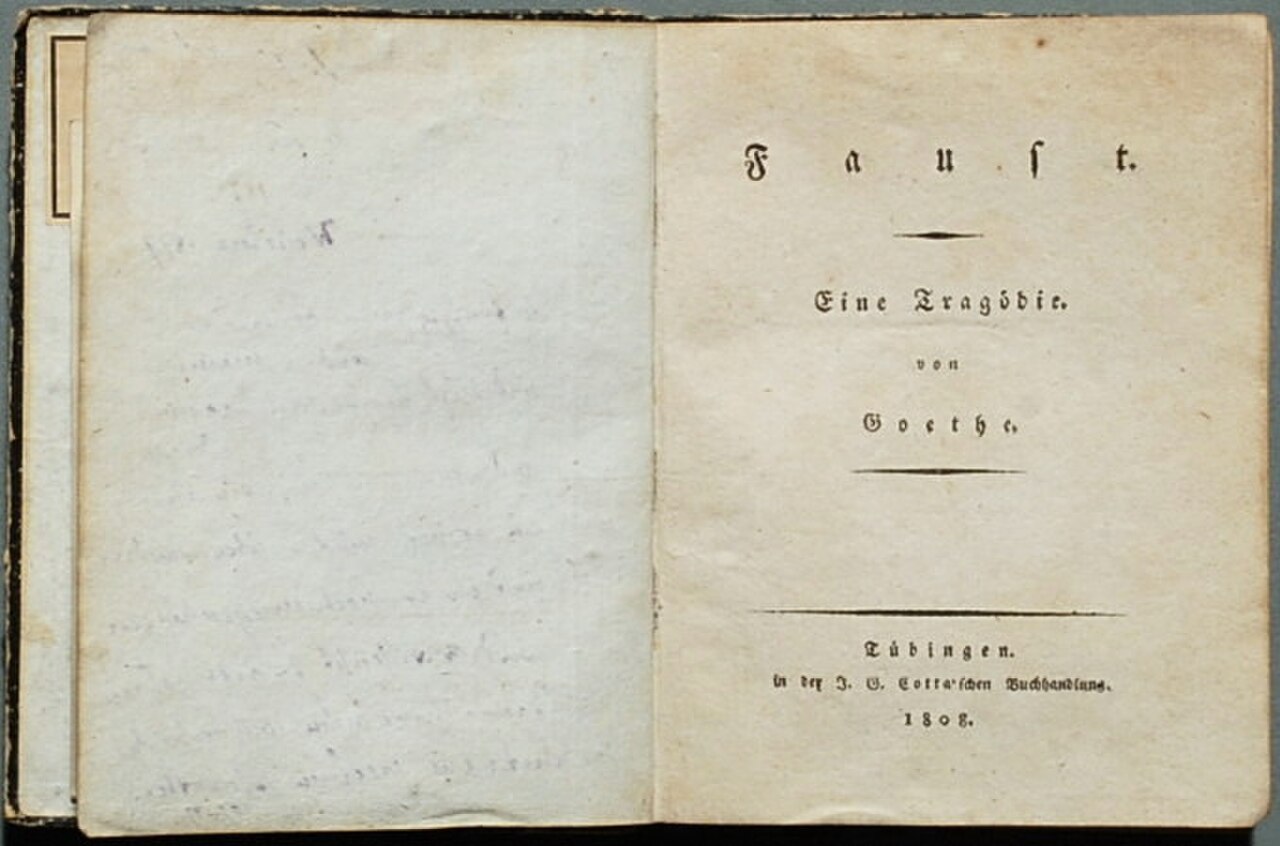
Goethe took forty years to finish Part One. He started the play in his twenties, set it aside, came back to it through his middle age, finished it in 1808 when he was nearly sixty. The monologue was always there. Faust's question (whether what the academy can deliver is what a serious life requires) was Goethe's own question, asked recurrently across decades. The opening scene reads, in this light, less like the setup for a tragedy and more like the diagnostic record of a real condition. The drama begins because the diagnosis is already complete.
What follows in the play (the deal with Mephistopheles, the seduction of Gretchen, the tragic catastrophe of Part One) depends on the premise the monologue establishes. Faust is not seduced by power or money. He is seduced by the possibility of an unmediated experience after a lifetime of mediated knowledge. The deal he strikes is structured around the gamble that no such experience will arrive, and Mephistopheles takes the bet. Part One ends in tragedy because Faust is too fast to claim the experience has arrived, and acts on that claim. Part Two, published in 1832 days before Goethe's death, returns to the question and answers it differently. The monologue is the door both parts walk through.