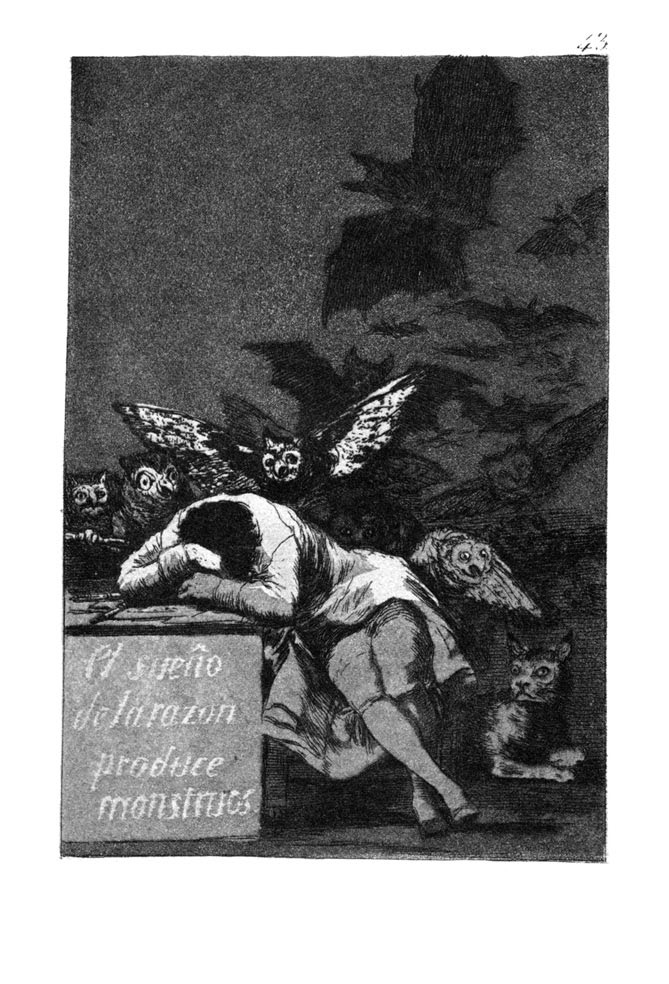


Plate 43 of Goya's Los Caprichos, etched between 1797 and 1799 and published in 1799. A man, a self-portrait of Goya as the engraver, slumps asleep across a writing desk, surrounded by owls, bats, and a sphynx-cat. The Spanish caption etched into the plate reads 'El sueño de la razón produce monstruos', 'The sleep of reason produces monsters.' Goya's note for the published series glossed the plate: 'Imagination abandoned by reason produces impossible monsters; united with her she is the mother of the arts and origin of their wonders.'
Los Caprichos is a series of 80 etchings published as a single volume in 1799. Goya intended the series as a satirical critique of late-eighteenth-century Spanish society, its superstitions, clerical abuses, sexual hypocrisies, and political corruption. The Spanish Inquisition pulled the volume from sale within days of publication; Goya offered the plates and remaining copies to Charles IV in exchange for a royal pension, ending the immediate threat. The plates survived and were reissued posthumously.
The etching is the most reproduced image from the Caprichos series and one of the most cited single artifacts in the philosophical iconography of the Enlightenment. The Prado holds a complete first-edition set. The image has become a touchstone for arguments about the political function of art, the relationship between reason and imagination, and the dangers of intellectual complacency.