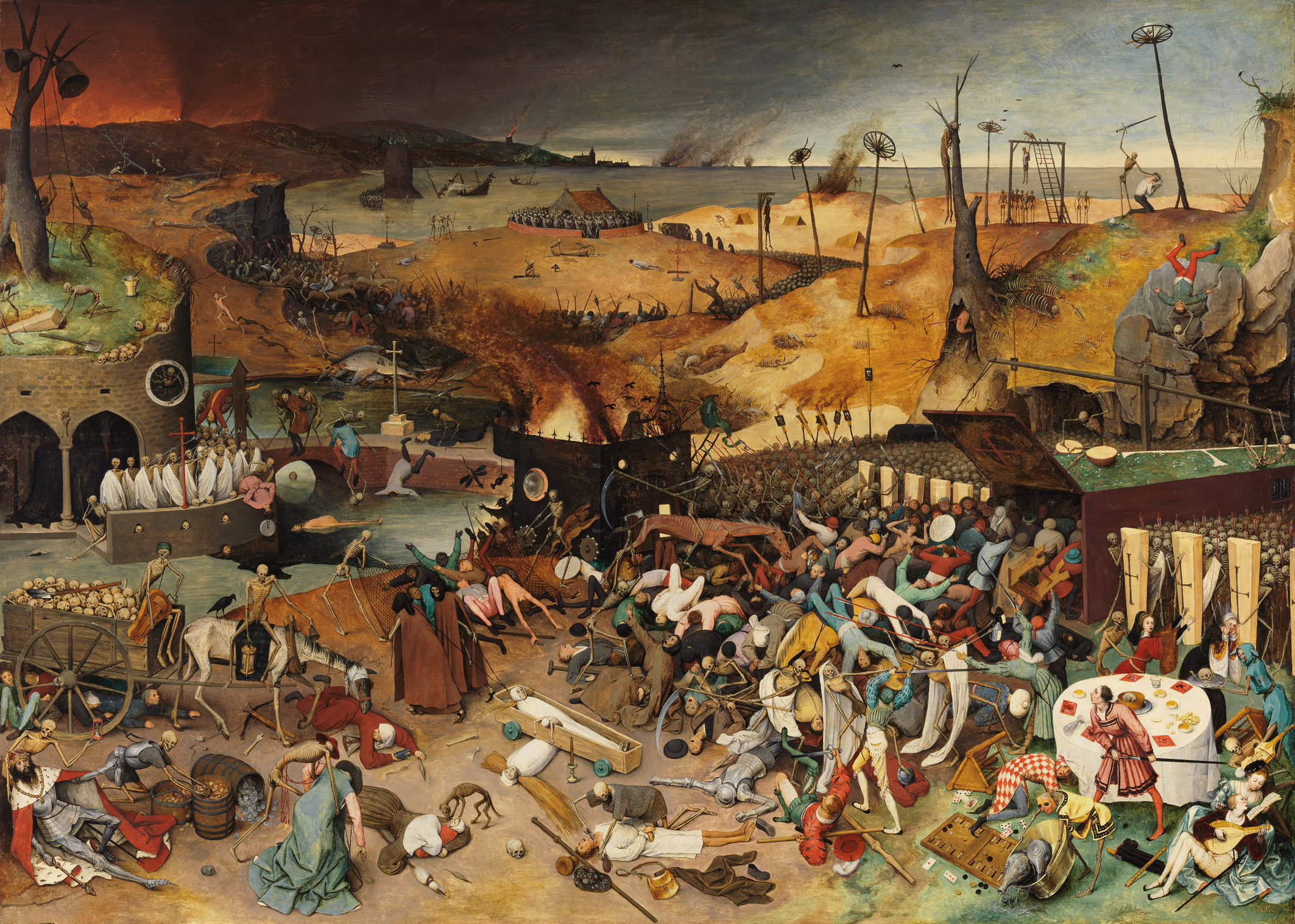


Pieter Bruegel the Elder painted The Triumph of Death around 1562. Across a scorched, panoramic landscape, an army of skeletons harvests the living without distinction of rank: a king's gold is tipped out beside him, a cardinal is led away, lovers play music unaware as a skeleton joins their duet. Skeletal legions drive crowds into a giant coffin-shaped trap; fires burn on the horizon and the sea is full of wrecks. It is a medieval danse macabre rendered with Netherlandish precision and no consolation.
The painting belongs to the tradition of the memento mori, but Bruegel scales it into a vision of universal, mechanical death that has more in common with later images of war and plague. It hangs in the Museo del Prado in Madrid and remains one of the most unflinching images of mortality in European art.