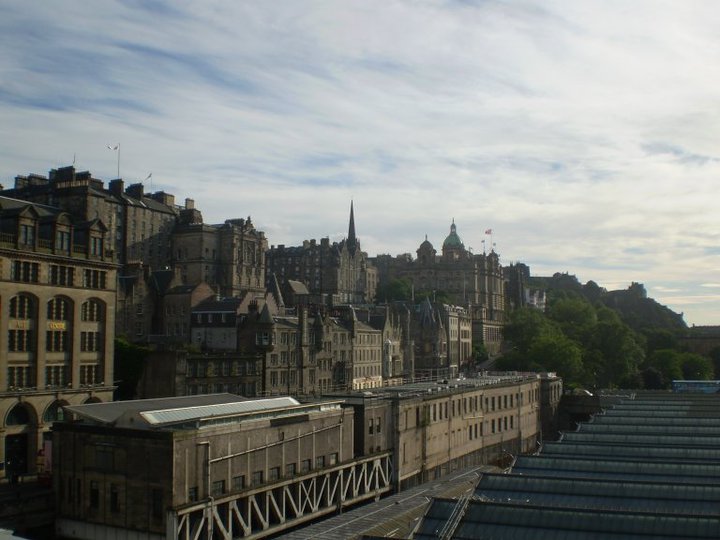


The Old Town of Edinburgh runs along the volcanic spur that connects Edinburgh Castle in the west to the Palace of Holyroodhouse in the east, the route known as the Royal Mile. The medieval-and-early-modern street plan, with its long single spine and narrow perpendicular closes ('wynds') dropping down both sides into the valleys below, is one of the most legible surviving medieval urban morphologies in Europe. The buildings along the Royal Mile mostly date from the late sixteenth through the early eighteenth century, tall stone tenements that were among the earliest multi-story residential buildings in Europe.
Edinburgh was the seat of the Scottish royal court until the 1603 Union of the Crowns and the centre of Scottish national life through the eighteenth-century Scottish Enlightenment (David Hume, Adam Smith, Adam Ferguson, James Hutton, Joseph Black, all of them worked here, often within walking distance of each other). St Giles' Cathedral on the Royal Mile is the cathedral of the Church of Scotland; the National Museum of Scotland sits at the Old Town's southern edge.
The Old Town together with the eighteenth-century planned New Town across the valley is a UNESCO World Heritage Site since 1995. Edinburgh's silhouette, castle on its volcanic rock, the cathedral spire, the descending close pattern, the Salisbury Crags on the horizon, is among the most photographed urban silhouettes in the British Isles.