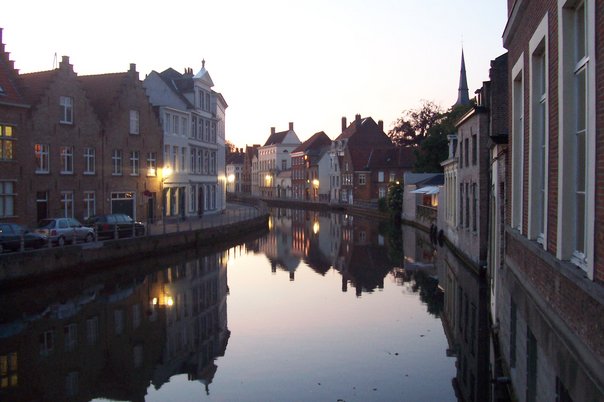



Bruges, the largest city of West Flanders, is the most completely preserved medieval city in northern Europe and a UNESCO World Heritage Site. The historic centre is a network of canals (the Reien) cut through the city in the twelfth and thirteenth centuries when Bruges was one of the most important commercial cities of the medieval world, the northern endpoint of the Italian-Flemish wool and luxury-goods trade.
The city's cultural moment was the fifteenth century, when the Dukes of Burgundy held court there. Jan van Eyck worked in Bruges from 1430 until his death in 1441; his Madonna with Canon van der Paele (1436) and Portrait of Giovanni Arnolfini and his Wife (1434) were painted in the city. Hans Memling settled in Bruges in 1465 and produced his major hospital commissions there. The Dukes of Burgundy ruled most of what is now Belgium, Luxembourg, and the Netherlands from Bruges in the fourteenth and fifteenth centuries before the court moved to Brussels.
By the late sixteenth century the harbour silted up and Bruges fell into a four-hundred-year decline that preserved the medieval city centre almost intact. The canals, the belfry, the Heilig-Bloedbasiliek (Basilica of the Holy Blood), and the Markt remain in something close to their fifteenth-century condition. Bruges is the canonical reference for what a high-medieval Flemish trading city looked like at its peak.