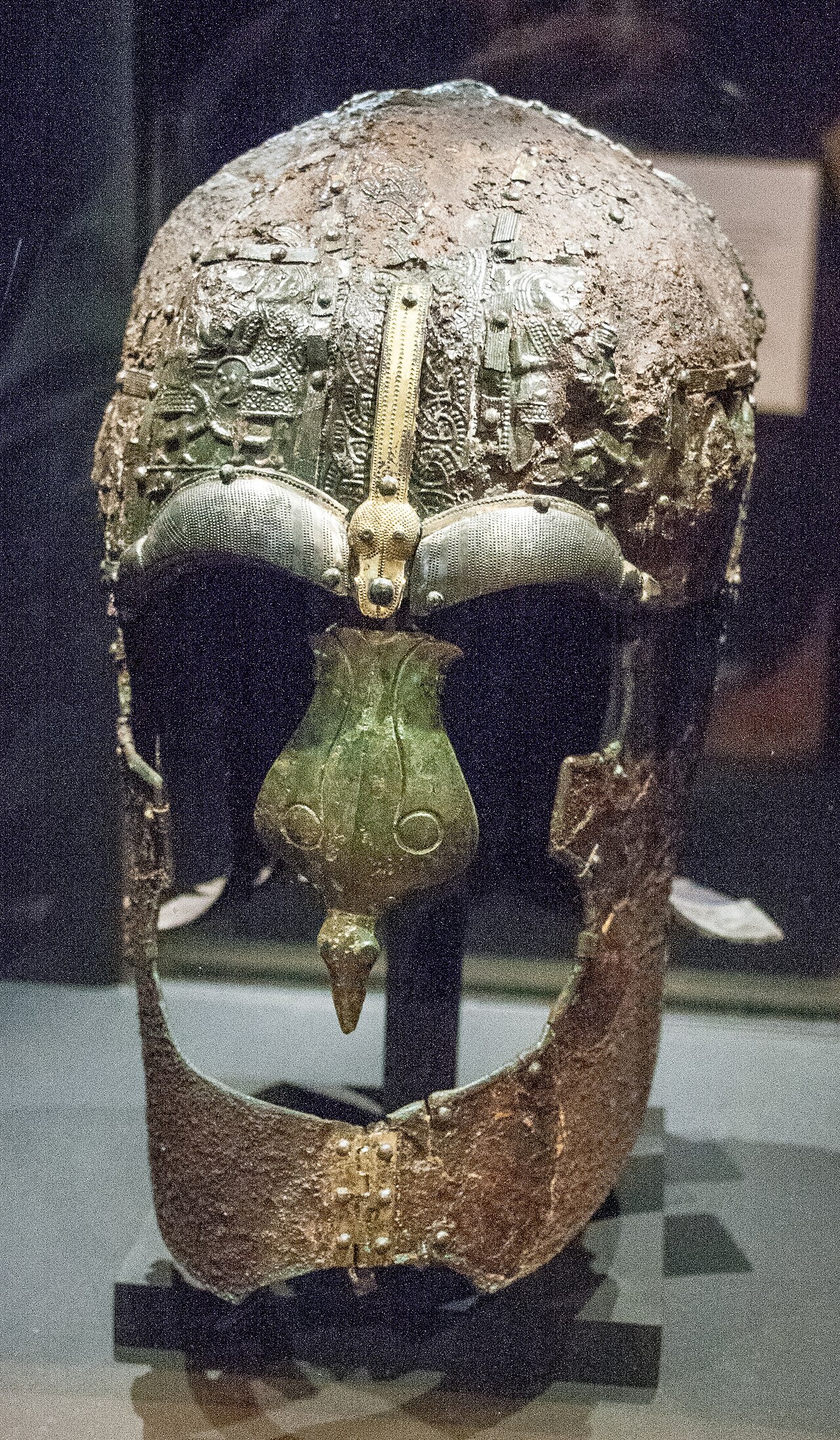



This Vendel-period helmet held at the Historiska Museet (Swedish National Historical Museum) in Stockholm is one of the canonical examples of pre-Viking Scandinavian elite armor. The Vendel period (550-790 CE) is the late Iron Age in Scandinavia immediately preceding the Viking Age proper (793-1066 CE); the elite warrior burials at the cemetery of Vendel in Uppland produced the type-specimens of the spangenhelm-style helmets with eye-pieces, nasal guard, and decorative bronze ornamental panels depicting warriors, horses, and ritual scenes.
The Vendel helmets are direct precursors of the Sutton Hoo helmet from East Anglia (c. 625 CE) and of the later Scandinavian Viking-Age helmets such as the Gjermundbu helmet (c. 970 CE, one of only six known Viking-Age helmets to survive substantially intact). The decorative panels, typically depicting armed warriors on horseback with raised spears, scenes from heroic poetry, and ritual imagery, connect the elite warrior culture of the Vendel period to the heroic poetry preserved much later in the Poetic Edda.
The helmet is in the Historiska Museet in Stockholm. The Vendel-period elite warrior burials at Old Uppsala, Vendel, and Valsgärde are the foundational archaeological sites for understanding the Scandinavian aristocratic culture from which the later Viking expansion would emerge.