Baroque
10 postsEt in Arcadia ego
Painting · Nicolas Poussin
Poussin's Et in Arcadia ego (c. 1638) is the great meditation of Baroque classicism: shepherds in an idyllic Arcadia reading a tomb's inscription, death present even in paradise.Crosses Baroque × Pain
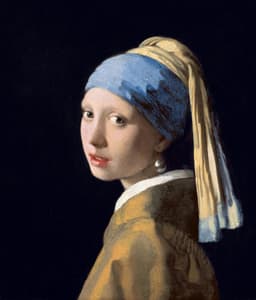
Girl with a Pearl Earring
Painting · Johannes Vermeer
Vermeer's Girl with a Pearl Earring (c. 1665) is the most famous of the Dutch Golden Age tronies, a study in light, gaze, and the single luminous pearl.Crosses Baroque × Painting × 1600s. Reference.
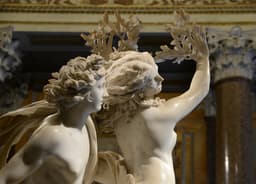
Apollo and Daphne (Bernini)
Sculpture · Gian Lorenzo Bernini
Bernini's Apollo and Daphne (1625) is the defining Baroque sculpture, marble caught at the instant Daphne turns to laurel to escape the god.Crosses Baroque × Sculpture × Greek Mythology. Reference.
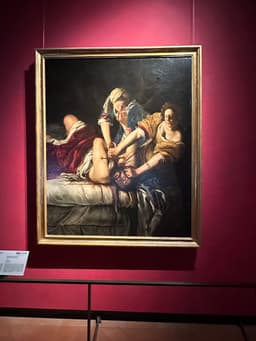
Judith Slaying Holofernes
Painting · Artemisia Gentileschi
Gentileschi's Judith Slaying Holofernes (c. 1620) is the most unflinching Baroque treatment of the biblical scene, and a landmark work by one of the era's few professional women painters.Crosses Baroq
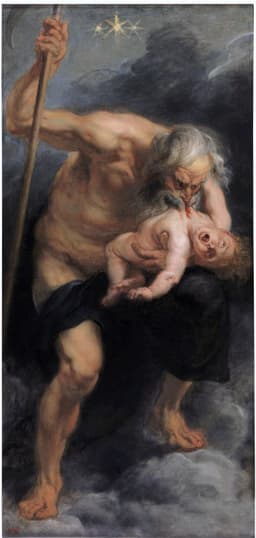
Saturn Devouring His Son (Rubens)
Painting · Peter Paul Rubens
Rubens' Saturn Devouring His Son (1636) gives the Roman myth its Baroque treatment: muscular, lit, and immediate. It sits in direct lineage with Goya's later, darker version already catalogued here.Cr
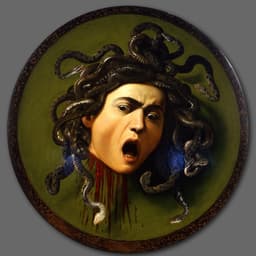
Medusa
Painting · Caravaggio
Caravaggio's Medusa (c. 1597), painted on a ceremonial parade shield, fixes the Gorgon at the instant of decapitation, the scream and serpents rendered with the violent realism that drove the whole Ba
Louis XIV in Coronation Robes
Painting (oil on canvas) · Hyacinthe Rigaud
Painted in 1701, Rigaud's official portrait of Louis XIV is the canonical image of European absolute monarchy at its rhetorical peak. Louis is dressed in the regalia of the coronation ceremony: the bl
The Geographer
Painting (oil on canvas) · Johannes Vermeer
Vermeer painted only about thirty-five works in his entire career. Two of them, painted around 1668 and 1669, depict male scholars: The Astronomer (now at the Louvre) and The Geographer (now at the St
Portrait of Pope Innocent X
Painting (oil on canvas) · Diego Velázquez
Innocent X did not want the portrait to make him look good. He wanted it to make him look right. Velázquez, who had arrived in Rome in 1649 for his second visit to Italy and stayed nearly two years, u
Las Meninas
Painting (oil on canvas) · Diego Velázquez
The painting is built around an unanswered question, and the question is the painting's actual subject. Velázquez stands behind a large canvas at the left edge of the picture, brush in hand, looking o